
Teak is one of the best woods you can leave outdoors. It's dense and naturally full of oils that help it resist water, rot and insects, which is why it has been used on boat decks for centuries. A teak bench doesn't need much from you to last for many years outside. The few things it does need make the difference between a bench that ages gracefully and one that turns blotchy, mildewed or cracked.
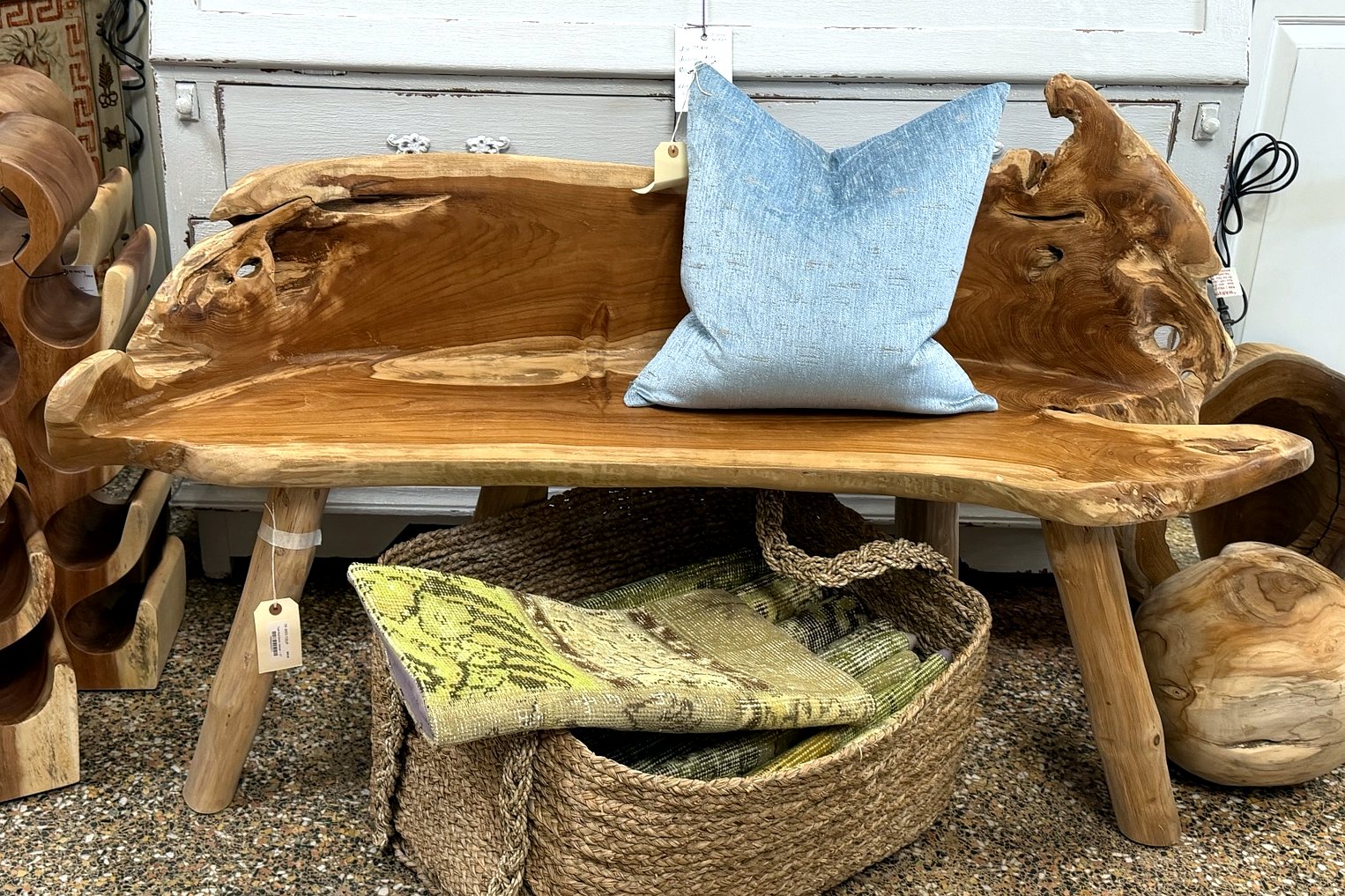
First, decide: silver-gray or golden?
New teak is a warm honey-gold. Left outside, sunlight breaks down the surface color and within a few months the wood turns a soft silver-gray. That gray is only skin-deep. It doesn't mean the wood is rotting or weakening, and many people choose it on purpose.
- Let it go silver: the least work. You just clean it once or twice a year.
- Keep it golden: more work. You clean it and apply a teak sealer about once a year, more often in full sun.
Either choice is fine for the wood. Pick the look you want, then follow the care below.
Where to put it

- Keep the feet out of standing water. The legs soak up moisture from wet ground through their end grain. Set the bench on a patio, pavers or a deck rather than directly on grass or soil, or put small rubber or plastic pads under the feet.
- Give it airflow. Don't push it tight against a wall or leave it under dripping gutters. Wood that dries quickly after rain stays cleaner and grows less mildew.
- Some shade helps. Teak handles full sun, but a covered porch or the shade of a tree slows the graying and drying, especially if you want to keep the golden color.
How to clean outdoor teak
Clean your bench at the start of spring and again at the end of the season, or whenever you see dirt, pollen or dark mildew spots.
- Rinse it with a garden hose to loosen dirt.
- Scrub with mild soap and water, a few drops of dish soap in a bucket of warm water, using a soft-bristle brush. Always scrub with the grain, not across it.
- For mildew or stubborn gray grime, use a cleaner made for teak, following the label.
- Rinse well and let the bench dry completely in the open air before you seal it or sit on it.
Don't use a pressure washer, wire brush or steel wool. They tear up the soft fibers between the grain and leave the surface rough and fuzzy. Steel wool can also leave tiny metal bits that rust and stain the wood.
How to keep teak golden: sealing
If you want the honey color, use a teak sealer (sometimes called a teak protector) made for outdoor furniture. It blocks UV light and repels water without building a film on top of the wood.
- Start with clean, completely dry wood. If it has already grayed, clean it with a teak cleaner first to bring the color back.
- If the surface feels rough or raised after cleaning, sand it lightly with the grain using fine sandpaper, then wipe off the dust.
- Apply a thin, even coat of sealer with a brush or cloth, following the label. Wipe off any excess so it doesn't stay tacky.
- Let it cure as the label says before anyone sits on it or it gets rained on.
- Reapply about once a year, or when water stops beading on the surface.
Why not teak oil, varnish or polyurethane?
- Teak oil looks great at first but wears off quickly outdoors, needs reapplying often, and can leave a sticky surface that attracts dirt and mildew. It's better suited to indoor teak.
- Varnish and polyurethane form a hard film on top. Outdoors that film eventually cracks and peels as the wood moves, and then it has to be sanded off completely.
Cracks are normal
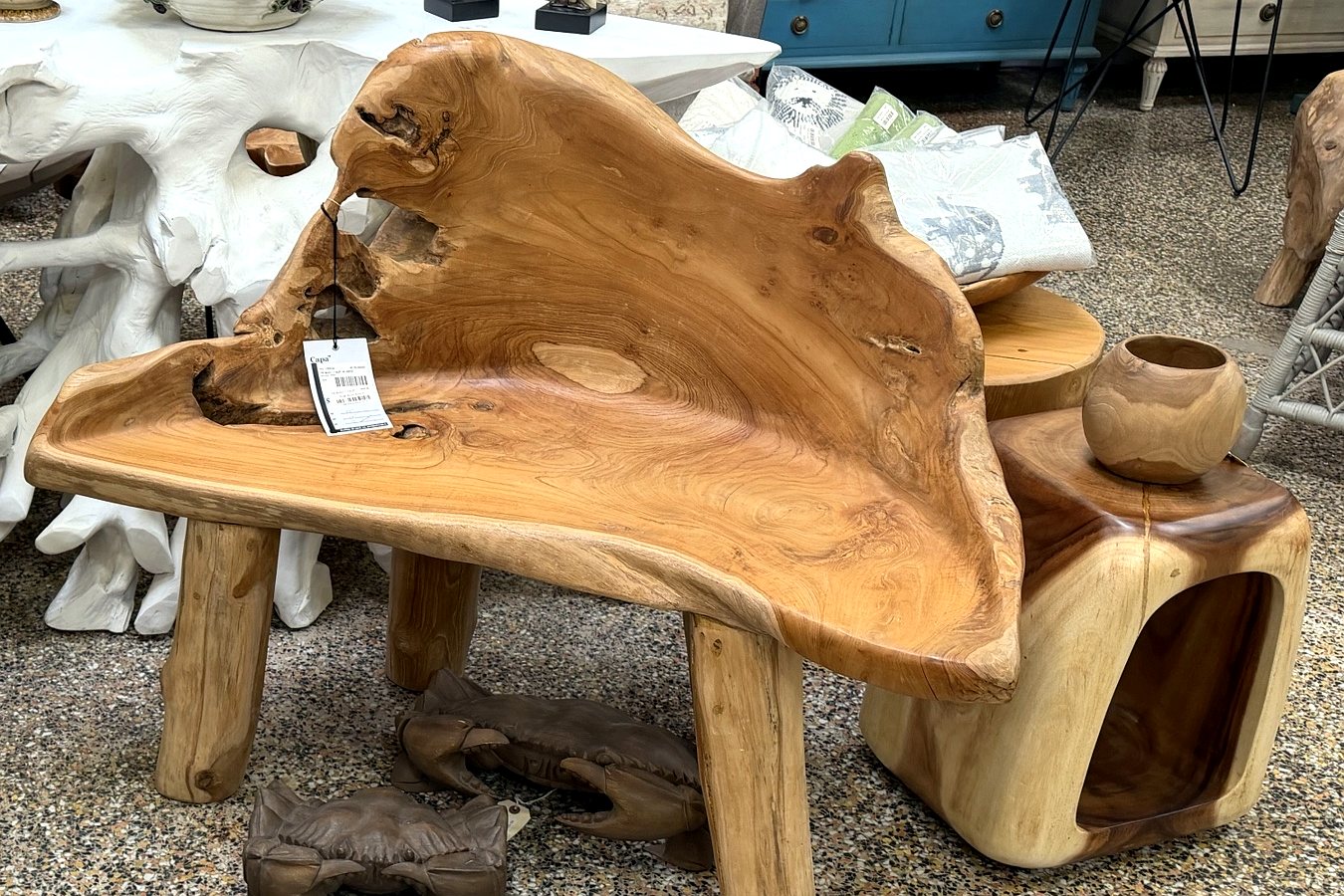
As teak goes through hot, dry days and cold, wet nights, it swells and shrinks. That can open small surface cracks, called checks, especially on the end grain and on thick, solid pieces like teak root benches. They're a normal part of solid wood living outside. Many close up again as the humidity changes, and they don't weaken the bench. Keeping the bench out of standing water and in a little shade keeps checking to a minimum.
Winter care in Maryland
Teak can stay outside through a Mid-Atlantic winter, rain and snow included. A few habits help it come through in good shape:
- Clean it before winter so leaves and dirt don't sit on it for months.
- Brush off heavy snow and don't let ice build up on the seat.
- If you cover it, use a breathable cover, not a plastic tarp. Plastic traps moisture against the wood and causes mildew. Leave room for air to get underneath.
- Storing it is even better. A garage, shed or covered porch gives the most protection. Don't move it straight into a heated room, though: going from damp and cold to dry and warm too fast can cause more checking.
Quick care checklist
- Spring: rinse, scrub with mild soap and a soft brush, let dry. Seal now if you're keeping it golden.
- All season: keep the feet off wet ground and wipe up spills, bird droppings and tree sap promptly.
- Fall: clean again, then cover with a breathable cover or move it under shelter.
- Never: pressure washer, wire brush, steel wool, varnish or polyurethane.
Shopping for a teak bench?
We carry handcrafted teak root benches, tables and stools, and every root piece is one of a kind. Before you buy one for outdoors, ask us which pieces are best suited to your spot. Stop by 52 S Market St in Downtown Frederick or call (301) 696-0066.